

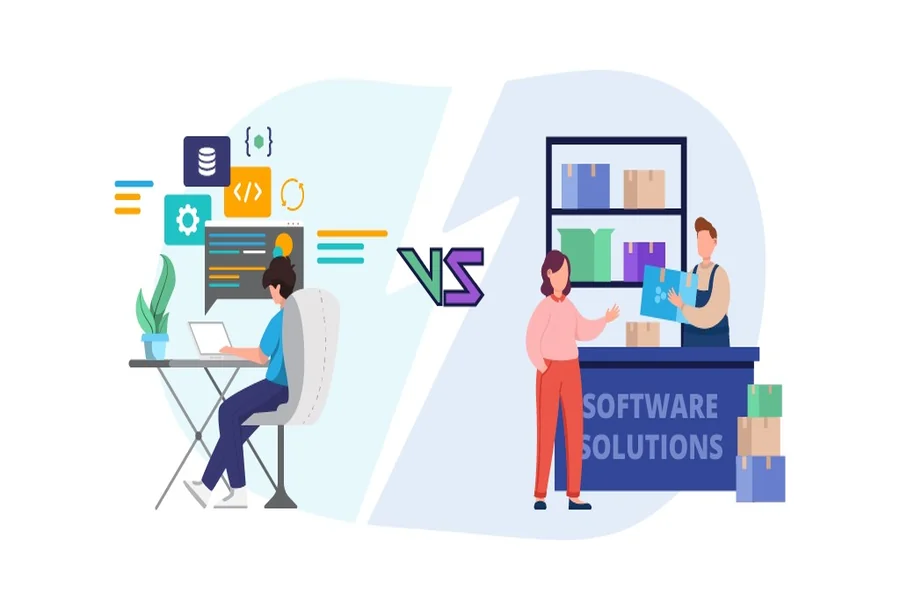
Technical leaders face a recurring dilemma: develop capabilities internally or engage external specialists. This decision point becomes particularly complex when building AI-powered products where specialized knowledge determines success rates. The wrong choice wastes budgets, delays market entry, and creates technical debt that haunts organizations for years.
Financial modeling rarely captures the true cost differential between internal development and product engineering solutions. Surface-level analysis compares hourly rates against consulting fees, missing the hidden expenses that tilt economic outcomes dramatically.
Internal Development Carries Invisible Costs
Recruitment timelines for specialized AI engineers average 4-6 months according to Stack Overflow’s Developer Survey. Compensation packages for computer vision specialists exceed $180,000 annually in competitive markets, before accounting for benefits, equipment, and overhead that add 30-40% to base salaries.
Knowledge acquisition delays project starts even after hiring completes. New engineers require 3-4 months to understand domain-specific requirements, existing architecture, and company processes. This onboarding period represents pure cost with zero product progress.
Team composition creates another hidden expense. A functional AI product team needs computer vision engineers, MLOps specialists, backend developers, DevOps engineers, and QA automation experts. Building this complete capability internally requires 6-8 full-time positions—an annual commitment exceeding $1.2 million before any code deploys.
Opportunity Cost Exceeds Direct Expenses
Market windows close while internal teams climb learning curves. Research published in the Harvard Business Review found that B2B software companies launching 6 months late sacrifice 33% of potential revenue over the product’s first three years.
Internal teams split focus between product development and organizational demands. Meetings, training requirements, performance reviews, and cross-departmental projects consume 25-30% of engineering capacity according to productivity studies from the Project Management Institute.
Technology evolution outpaces in-house learning. Computer vision frameworks, deployment optimization techniques, and edge computing architectures advance rapidly. Internal teams struggle to maintain cutting-edge expertise across the full technical stack required for modern AI products.
External Solutions Deliver Speed-to-Value
Pre-built frameworks and proven architectures eliminate months of foundational work. Engineering teams with established computer vision pipelines, model optimization playbooks, and deployment templates compress development cycles by 50-70%.
Specialized expertise solves edge cases efficiently. Challenges like real-time video processing at edge devices, handling varying lighting conditions, or achieving sub-second latency require specific knowledge that external teams possess from prior implementations.
A study in the International Journal of Project Management demonstrated that organizations using external product engineering reduced time-to-market by an average of 5.3 months compared to fully internal development approaches.
Calculating the Financial Crossover Point
Projects requiring fewer than 6 months of engineering effort often favor internal development, assuming requisite skills already exist on staff. The fixed costs of vendor engagement, knowledge transfer, and contract management create overhead that offsets external efficiency gains on shorter timelines.
Multi-year product roadmaps with continuous feature development generally justify building internal capabilities. Organizations planning sustained investment in AI products amortize hiring and training costs across extended timelines.
The middle ground—projects spanning 8-18 months—presents the strongest case for external solutions. Initial product versions launch faster with external teams, while organizations gradually build internal maintenance capabilities through knowledge transfer.
Risk Distribution Shapes Decision Economics
Failed projects represent total loss when developed internally. The full cost of salaries, infrastructure, and opportunity cost provides zero return when initiatives don’t reach production.
External engagements often include milestone-based payment structures that align cost with progress. This payment approach limits downside exposure compared to maintaining internal teams through extended development cycles.
Technical debt accumulation differs substantially between approaches. Internal teams facing deadline pressure often compromise on code quality, documentation, and testing coverage. These shortcuts create maintenance burdens that increase total cost of ownership by 40-60% according to analysis published in IEEE Software journal.
Hybrid Models Optimize Long-Term Economics
Many organizations achieve optimal outcomes by combining approaches. External teams handle initial product development while internal engineers focus on integration, deployment infrastructure, and feature planning.
This model transfers knowledge systematically. Internal staff work alongside external engineers, learning implementation patterns and architectural decisions that inform future independent work.
Maintenance responsibility transitions gradually. External teams typically provide 3-6 months of post-launch support while internal capabilities mature, preventing knowledge gaps that compromise product stability.
Making Evidence-Based Choices
Financial justification requires modeling total cost over the product’s expected lifespan, not just initial development phases. Include recruitment timelines, opportunity costs of delayed launches, and technical debt accumulation in economic analysis.
Organizations lacking current AI engineering capacity almost always achieve better outcomes through external partnerships for first-generation products. Specialized engineering teams accelerate market entry while establishing foundations that support long-term internal growth.
