

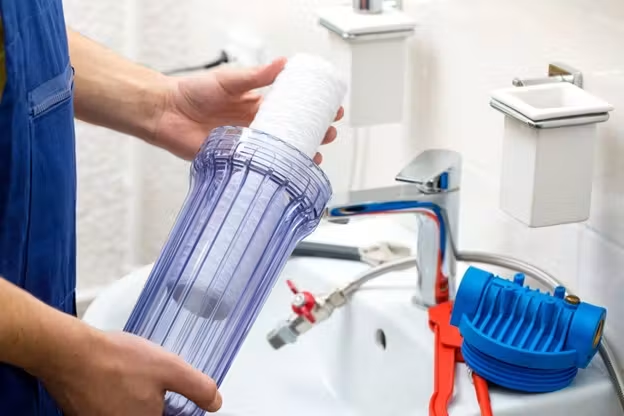
Once you move into a rented flat, you may already find a water purifier in the kitchen. Most of the time, the landlord or the previous tenant has left it. And there is nobody who hands you the purifier maintenance details the moment you shift.
Instead of scheduling water purifier servicing, you are mostly watching out for signs. How does the water taste? How long does it take to fill the tank? Most used water purifiers do not have the AMC papers. Here’s how to run the diagnostic on a water purifier.
What to Do When There’s No Water Purifier Servicing History?
A water purifier in a rented flat rarely comes with any record of when it was last serviced. In most shared housing, it’s outlasted several sets of tenants. Manufacturer advice is based on someone who bought the unit new and can count the months since purchase.
For a new tenant with an old water purifier, it assumes its usage after inheriting the appliance in its mid-life. That gap is exactly why a water purifier on rent works out differently. The service record starts on the day it’s installed for you, not on the day a stranger last remembered to make a call.
How Do You Check Water Purifier Servicing History?
Start with the unit itself. Most branded purifiers have a small sticker inside the cabinet door or near the filter housing with an install or last-service date, even if nobody mentioned it at move-in.
If there is no sticker, ask the old tenant or the landlord. In case you do not get a solid answer, open the cabinet and look at the sediment filter through its housing. One that’s still white or light beige is recent, while one that’s turned brown or grey has clearly been in service a while.
Why Do Taste and Flow Matter for Water Purifier Maintenance?
A flat, metallic, or chlorine-like taste is usually the first thing anyone notices. It indicates that the carbon stage is losing its ability to absorb odour and residual chlorine.
A noticeably slower trickle from the tap often means a clogged sediment or carbon pre-filter restricting flow before water even reaches the membrane.
Leakage, usually around a joint, an O-ring, or the storage tank connector, is a different signal. It typically means a worn seal that’s been failing slowly, which is far more likely on a unit nobody’s opened up recently than on one serviced on schedule.
Does a Rising TDS Mean Servicing?
Only relative to itself — a single TDS reading means very little if you don’t know what the water measured before.
What actually matters is a reading that keeps climbing over two or three checks a few weeks apart. This indicates the membrane is rejecting less than it used to, regardless of the absolute number. This usually means the membrane’s effective life is coming to an end.
How Does Renting a Purifier Sidestep Servicing Problem?
One way to avoid inheriting a neglected purifier is to never inherit one in the first place. For bachelors and first-time renters moving flats every year or so, traceability matters more than owning the appliance.
Most water purifier rental plans bundle filter changes and annual maintenance into the subscription. It isn’t a fix for every situation; someone who settled into a flat for years may still prefer to own and manage the unit themselves. For shared apartments with tenants coming and going, it removes the need to maintain a record.
Who’s Responsible for Water Purifier Servicing: You or the Landlord?
It depends entirely on who the purifier belongs to, and that’s worth settling before a small symptom turns into a bigger repair. If the unit came with the flat and is listed as the landlord’s fixture, servicing it is generally their responsibility.
If you bought or brought the unit yourself, arranging RO service or water purification is entirely on you. Sometimes a single symptom just needs a targeted repair rather than a full-service call.
On a rented purifier, that responsibility mostly falls to the provider. The appliance platform schedules the filter changes or sends a technician to your place if you raise a service issue.
Final Thoughts
None of these signs needs an emergency call the moment they appear, but they do need attention within a few weeks. If the taste hasn’t returned to normal, the flow is still slow, or the TDS reading is still increasing on the second check, it’s time to schedule water purifier servicing.
Without a service history to fall back on, the symptoms are the only information available. Whoever ends up making that call, it’s better to base it on the water quality than on an assumption about when someone last checked.
