

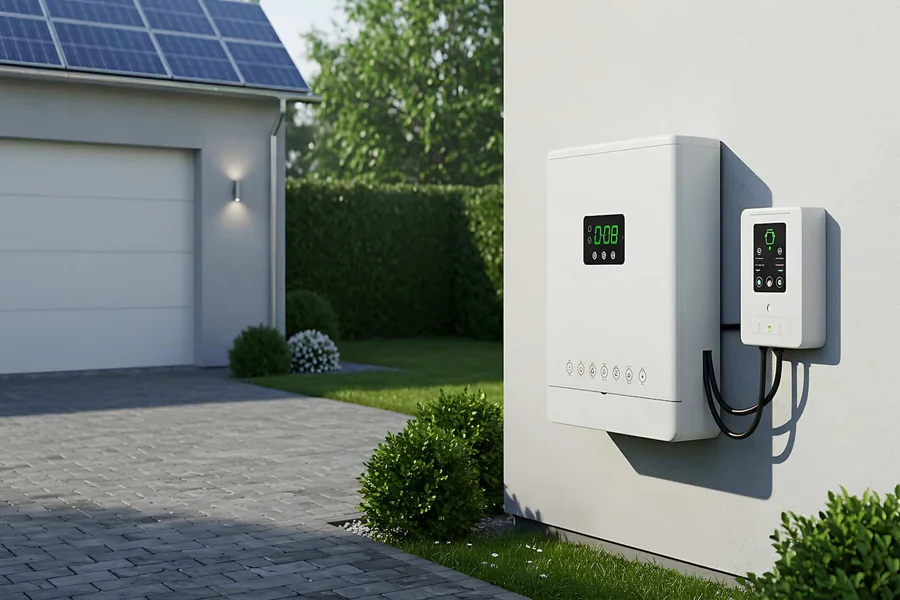
Australia has one of the highest rates of rooftop solar adoption in the world, and battery storage is increasingly part of that picture. As electricity prices continue to rise and the technology becomes more affordable, more homeowners are asking whether adding a battery to their solar system makes genuine financial sense.
How solar battery storage actually works
A solar battery stores excess electricity generated by your panels during the day and releases it when the panels are not producing — most commonly in the evening and overnight. Without a battery, surplus solar generation is typically exported to the grid at a relatively low feed-in tariff rate, reducing the financial return.
Battery systems are rated by capacity, measured in kilowatt-hours, and by power output, measured in kilowatts. Capacity determines how much energy can be stored; power output determines how quickly that energy can be delivered to the home. Both figures matter when choosing a system suited to your household’s actual usage patterns.
Most residential battery systems can be integrated with existing solar installations, though compatibility varies by product and inverter type. Some systems also offer backup power functionality — keeping selected circuits running during a grid outage — which provides an additional layer of security that many homeowners in regional areas find particularly valuable.
Is a battery right for your home?
The value of a battery depends heavily on how and when your household uses electricity. Homes that consume most of their power in the evening, and whose solar systems currently export a large proportion of what they generate, stand to gain the most from adding storage to an existing system.
Speaking with a qualified installer about solar energy storage NSW is the most reliable way to assess whether a battery suits your circumstances. A good installer will model your actual consumption data against different battery options before recommending anything, rather than defaulting to whichever product they happen to have in stock.
Battery payback periods vary depending on system size, electricity tariff structure, feed-in rates, and household usage patterns. For many Australian homeowners, payback currently sits somewhere between seven and twelve years, though this continues to improve as battery prices fall and grid electricity costs keep rising.
Government rebates and incentives can significantly affect the economics of installation. Several state governments offer subsidies for eligible households, and federal schemes provide a further benefit. It is worth checking what is currently available in your state before finalising any purchase decision, as these programs change regularly.
Choosing a battery system and installer
The Australian battery market includes products from a range of manufacturers, and quality varies considerably. Key factors to evaluate include battery chemistry, warranty terms, cycle life, and the manufacturer’s track record and local support capability. Choosing a well-supported product from an established manufacturer reduces the risk of issues after installation.
Warranty terms deserve close attention. Most reputable manufacturers offer warranties of ten years or more, but the conditions attached — regarding permitted temperatures, depth of discharge, and what constitutes a valid claim — vary significantly. Reading the fine print before committing is always worthwhile and frequently revealing.
Installer credentials matter as much as the product itself. Batteries should only be installed by Clean Energy Council accredited professionals, and it is worth asking specifically about their experience with the brand you are considering. An experienced installer will always carry out a proper site assessment before committing to a design.
Researching solar battery options online means navigating a large volume of content of variable quality. Running a blog SEO audit on providers’ websites helps identify those publishing accurate, up-to-date technical information rather than simply chasing traffic with thin or recycled content — a useful filter when comparing potential installers.
Getting the most from your battery
Battery management settings significantly affect system performance. Most modern batteries allow users to configure when the battery charges, when it discharges, and whether it prioritises self-consumption or grid export. Taking time to configure these settings correctly — or having your installer do so at commissioning — can meaningfully improve your financial return.
Virtual power plant programs, which allow battery owners to export stored electricity during high-demand periods in exchange for payments or credits, are available through some energy retailers in Australia. Participation can improve the economics of ownership considerably, though terms and benefits vary by program and by location.
Regular monitoring of system performance is straightforward with most modern batteries, which come with apps displaying real-time generation, consumption, and storage data. Reviewing this periodically helps confirm the system is performing as expected and whether your usage habits are well-matched to how the system has been configured.
The combination of solar generation and battery storage represents a significant step toward genuine energy independence for Australian households. Whether your motivation is financial, environmental, or energy security, approaching the decision with accurate information and a verified, experienced installer produces the best long-term outcome.
