

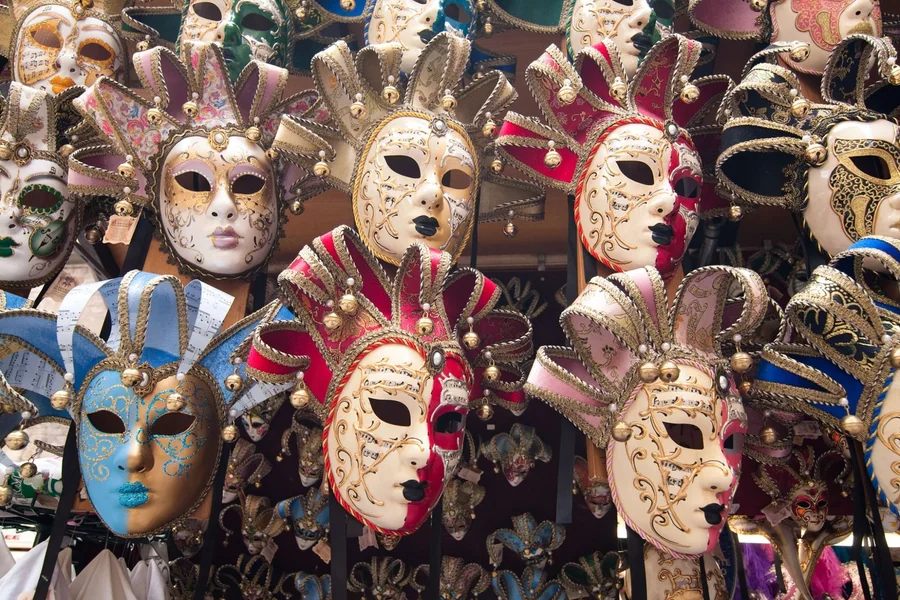
Venetian masks are one of the most iconic symbols of Italian culture, representing centuries of tradition, artistry and mystery. Originating in Venice during the Renaissance, these handcrafted creations were once used to erase social boundaries, allowing people to interact freely during celebrations and festivals. Today, Venetian masks continue to captivate collectors, travelers and art lovers worldwide, standing as a unique expression of Italian craftsmanship and cultural heritage.
Every authentic Venetian mask tells a story — not only of design, but of the artisans who preserve techniques passed down through generations.
The Historical Origins of Venetian Masks
The tradition of Venetian masks dates back to the 13th century, when Venice was a powerful republic known for its vibrant social life. Masks became central to the famous Carnival of Venice, a celebration where anonymity allowed citizens to temporarily step outside rigid social structures.
Wearing a mask created freedom: nobles and commoners could mingle, identities could be concealed, and social roles could be suspended. This symbolic liberation is one reason Venetian masks remain associated with elegance, intrigue and theatrical beauty.
Types of Traditional Venetian Masks
Several classic styles define the world of Venetian masks, each with its own meaning and visual identity. The Bauta is one of the most recognizable, designed to conceal the entire face while allowing the wearer to speak and drink. The Colombina mask covers only part of the face and is often richly decorated with gold leaf, feathers and crystals.
The Medico della Peste, or Plague Doctor mask, with its long beak, has historical roots in 17th-century medicine and has become an iconic artistic symbol. Other variations include decorative full-face masks and fantasy interpretations inspired by Venetian theater and baroque aesthetics.
Craftsmanship Behind Authentic Venetian Masks
Authentic Venetian masks are handmade using traditional papier-mâché techniques refined over centuries. Artisans carefully mold each piece, allowing it to dry naturally before applying layers of paint, gold leaf and intricate decorations. This process requires patience, precision and artistic vision.
High-quality Venetian masks are not mass-produced souvenirs; they are works of art. Each brushstroke and ornamental detail reflects the individuality of the craftsman. Buying authentic masks supports local Venetian workshops and preserves cultural heritage that cannot be replicated by industrial manufacturing.
Venetian Masks in Modern Design and Collecting
Today Venetian masks are appreciated not only during Carnival, but also as decorative art pieces. Collectors display them as symbols of Italian elegance, while designers use them to bring theatrical flair to interiors. Luxury events, masquerade balls and themed celebrations worldwide continue to embrace Venetian mask traditions.
Their blend of history and fantasy makes them timeless objects — equally suited for performance, décor or personal collections.
How to Choose an Authentic Venetian Mask
When selecting a Venetian mask, authenticity matters. Handmade masks show slight variations that prove their artisanal origin. Materials such as papier-mâché, hand-applied gold leaf and hand-painted finishes are key indicators of quality.
Purchasing from specialized Venetian artisans ensures originality, durability and artistic value. An authentic mask is more than a souvenir; it is a cultural artifact that carries centuries of tradition.
The Enduring Appeal of Venetian Masks
Venetian masks continue to fascinate because they represent freedom, artistry and transformation. They connect the past with the present, preserving a ritual that has survived political changes, modernization and global tourism.
Owning a Venetian mask means holding a piece of Venetian identity — a blend of mystery, beauty and craftsmanship that transcends time.
