

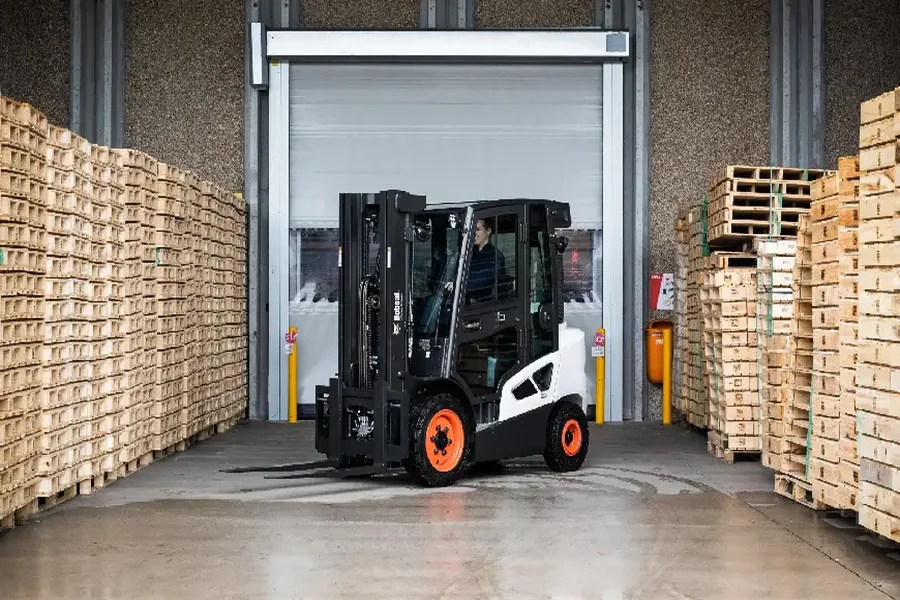
Before most people ever think about it, entire economies have already moved dozens of tons of material from one place to another—quietly, efficiently, and often in seconds. Hidden behind that seamless flow of goods is a machine that rarely gets attention but constantly does the heavy lifting: the forklift. It doesn’t just move pallets; it keeps warehouses organized, factories running, construction sites progressing, and global trade in motion.
In almost every industry that depends on physical goods, forklifts act as the invisible force that connects production, storage, and distribution. Without them, modern logistics would slow down dramatically, costs would rise, and many of the systems we take for granted would simply not function at today’s speed.
The Core Function: Efficiency in Material Handling
At their core, forklifts are designed to solve a fundamental problem: how to move heavy or bulky items that are too large or unsafe for manual handling. Before forklifts became widespread, businesses relied on manual labor or simple mechanical tools like carts and hoists, which were slow, inefficient, and physically demanding.
Forklifts changed this completely. With the ability to lift loads ranging from a few hundred kilograms to several tons, they dramatically reduce physical strain on workers while increasing productivity. Tasks that once required multiple workers and a significant amount of time can now be completed by a single operator in minutes.
This improvement in efficiency leads directly to reduced labor costs, faster workflows, and safer working environments—three critical factors for any competitive business.
Warehousing and Logistics: The Heart of Forklift Use
Warehouses are among the most common environments where forklifts are essential. Modern warehousing is all about maximizing space and speed, and forklifts make both possible.
They allow goods to be stacked vertically, dramatically increasing storage capacity without expanding physical space. In distribution centers, forklifts are used to load and unload trucks quickly, keeping supply chains moving without delays.
With the rapid rise of e-commerce, forklifts have become even more important. Online retail depends on fast order fulfillment, and forklifts ensure that products move efficiently through sorting and shipping systems.
Manufacturing: Supporting Production Lines
In manufacturing environments, forklifts serve as a vital link between different stages of production. Raw materials must be delivered to assembly lines, and finished goods must be moved to storage or shipping areas without delay.
When forklifts operate efficiently, production lines stay active. When they don’t, bottlenecks occur, slowing down the entire manufacturing process. This makes forklifts a critical factor in maintaining consistent output.
Many industries also use specialized forklifts designed for specific materials, from fragile components in electronics to heavy parts in automotive manufacturing.
Construction Sites: Strength and Versatility in Harsh Conditions
Construction environments are unpredictable, often uneven, and constantly changing. Forklifts designed for these conditions—such as rough terrain models—are built for durability and stability.
They transport materials like steel beams, bricks, cement pallets, and heavy tools across job sites, reducing the need for manual lifting and increasing safety.
By ensuring that materials are always where they need to be, forklifts help construction projects stay on schedule and reduce costly delays.
Retail and Wholesale: Behind-the-Scenes Efficiency
Although customers rarely see them, forklifts play a crucial role in retail and wholesale operations. Large stores and distribution centers depend on them to manage inventory efficiently.
During peak seasons, such as holidays or major sales events, forklifts become especially important. They help ensure that stock is processed, organized, and replenished quickly to meet customer demand.
Without forklifts, retailers would struggle with slower restocking times and increased logistical bottlenecks.
Ports and Shipping: Moving the Global Economy
At ports and shipping terminals, forklifts are part of a much larger system that supports global trade. These environments deal with massive quantities of cargo that must be transferred between ships, trucks, and storage areas efficiently.
Forklifts help speed up loading and unloading processes, reducing ship turnaround time and improving the overall efficiency of international logistics.
In many ways, they serve as one of the first and last points of contact for goods entering and leaving countries.
Safety and Technological Advancements
Modern forklifts are significantly safer and more advanced than earlier models. Features such as stability systems, load sensors, and improved visibility tools help reduce workplace accidents.
Training remains a key component of forklift safety. Properly trained operators are essential for maintaining safe and efficient operations in busy industrial environments.
Electric forklifts are also becoming increasingly popular due to their environmental benefits and quieter operation. Meanwhile, automation is beginning to transform the industry, with autonomous forklifts already being tested in advanced logistics systems.
Economic Impact and Business Value
Forklifts offer strong long-term economic value. While they require an initial investment and ongoing maintenance, their ability to reduce labor costs and increase productivity makes them highly cost-effective.
They also provide scalability. As businesses grow, forklifts make it easier to expand operations without a proportional increase in workforce size.
In competitive industries, this flexibility can be a major advantage.
Forklifts are far more than simple industrial machines—they are essential components of modern business infrastructure. From warehouses and factories to construction sites and global ports, they ensure that goods move efficiently, safely, and reliably.
As technology continues to evolve, forklifts are likely to become even smarter and more automated. However, their core purpose will remain unchanged: keeping the world’s goods moving, one load at a time.
